



Mom called again, asking about the same appointment for the third time today. Last week, she left the stove on. You’ve started keeping your phone on the nightstand because you’re not sure what tonight will bring. In-home dementia care is one of the most demanding things a family can take on, and for many families, the most impactful.
In-home dementia care is the support a person with Alzheimer’s or other forms of dementia receives in their own home. It can come from family, trained professional caregivers, or both. Services range from companionship to skilled medical visits, and the care plan changes as the disease progresses.
There isn’t a lot of literature about what care at home actually involves, how to set up routines and safety, and the signs that say it’s time to bring in professional help. Our goal is to help those caring for loved ones with dementia receive the education and knowledge that can help them provide better care and assistance in their daily living.
What does in-home dementia care include?
In-home dementia care covers three broad service categories: companionship, personal care, and homemaker support. Most families need a mix, and the mix changes as dementia progresses.
According to the Alzheimer’s Association, services include:
- Companion services: supervision, conversation, and activities like puzzles, reading, or going for a walk
- Personal care services: help with bathing, dressing, toileting, eating, and grooming
- Homemaker services: light housekeeping, laundry, meal preparation, and grocery shopping
In the early stage, your loved one’s needs may only be reminders and companionship. Frequent visits from friends and maintaining some recreational activities benefit the person with dementia and give them a way to continue to connect with their life before they became ill. By the middle stage, the longest and often most demanding stage, they will need hands-on help with daily tasks and steady supervision. In the more advanced stages, around-the-clock care is usually necessary.
Most adults with Alzheimer’s and related dementias are cared for in their own homes, often by family members, according to the Centers for Disease Control and Prevention. Many families care for a loved one at home through every stage of the disease, while others combine home care with a memory care community in the late stage. Familiar surroundings reduce confusion, ease anxiety, and help preserve a sense of identity, which is part of the case for staying at home when it can be done safely. Finding the appropriate local resources is important to maintain levels of comfort for both the carer and the person living with dementia.
Why routine matters and how to build one

A consistent daily routine reduces confusion, anxiety, and agitation in someone with dementia, and it makes the day easier to plan for everyone in the household. The hardest days are often the unpredictable ones.
Try to schedule the same activities at roughly the same times each day: meals, medications, bathing, walks, rest, and bedtime. Predictability lowers stress for your loved one and gives the rest of the family a rhythm they can plan around.
How you communicate matters as much as the schedule. Use short sentences. Ask one question at a time. “Would you like a cup of tea?” works better than “Would you like a cup of tea? We have black, herbal, or green.” Speak slowly, allow extra time for a response, and avoid arguing or correcting. The emotional experience is real even when the memory is not.
Music is one of the last memories to fade. Familiar songs from your loved one’s youth can lift mood, spark memory, and ease agitation in ways conversation cannot. So can light cognitive activities: sorting laundry, watering plants, simple puzzles, looking through old photos. The goal is not to test memory but to keep your loved one engaged in something that feels purposeful.
How to make a home safer for someone with dementia
Making a home safer for someone with dementia means addressing three risk areas: falls, wandering, and everyday hazards like the stove and medications. Dementia can affect vision in surprising ways. People with dementia often lose peripheral vision and have trouble judging depth, so a familiar living room can become a tripping hazard.
Practical changes that reduce risk:
For falls:
- Mark the edges of stairs with brightly colored tape so steps are visible
- Use contrasting colors for walls and floors and avoid busy patterns
- Add grab bars in the bathroom and tub
- Remove loose rugs or secure them firmly
For wandering:
- Install door sensors or alarms that alert you when someone leaves
- Consider in-home cameras, personal emergency alert systems and lanyards
- Register your loved one with the Alzheimer’s Association MedicAlert Safe Return program
- Let neighbors know so they can help if needed
For everyday safety:
- Set the water heater to 120°F to prevent scalding, per the National Institute on Aging
- Add safety knobs and an automatic shut-off to the stove
- Lock up medications, cleaning products, and sharp items
- Use a pill organizer or set alarms for medication management
You don’t have to do everything at once. Walk through the home room by room and fix the most obvious risks first.
How to handle behavioral changes
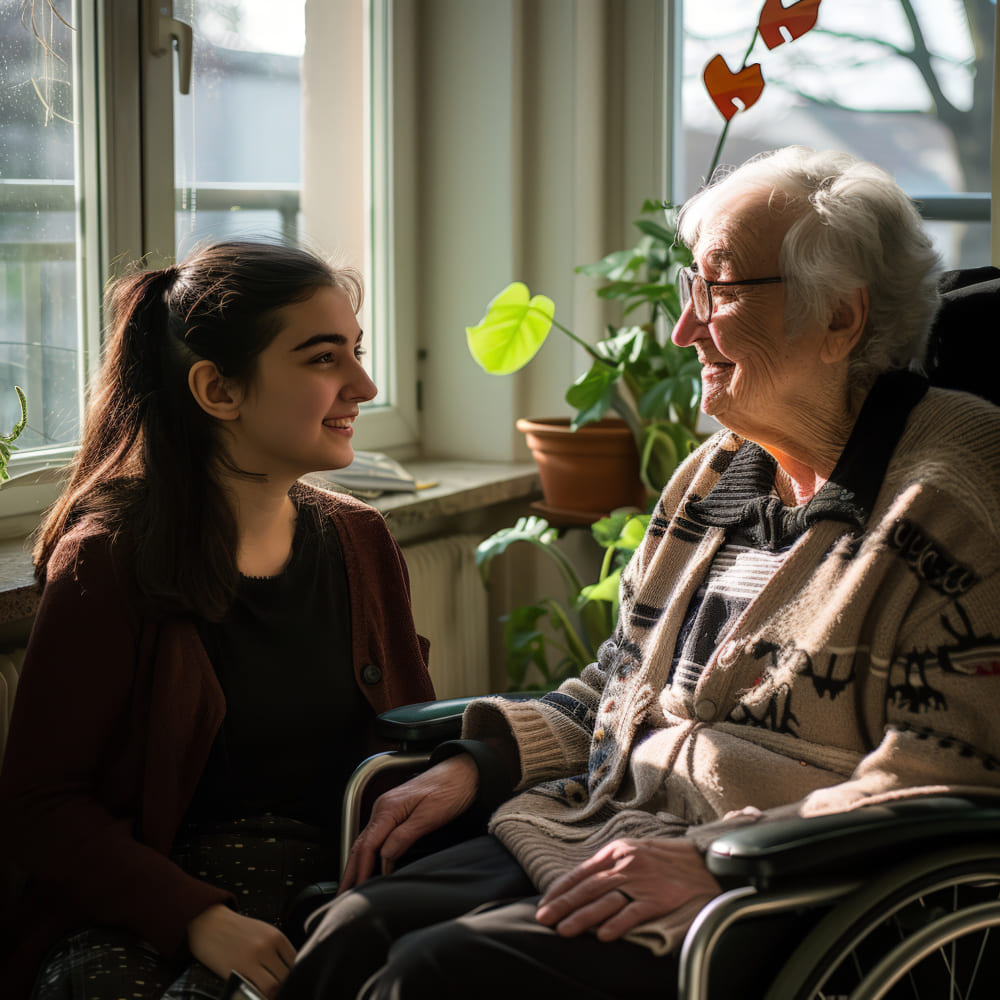
Behavioral changes are common in the middle and late stages of dementia. Many families notice them most in the late afternoon and evening: your loved one was calm at lunch and is now pacing or angry by dinnertime. Confusion, anxiety, and agitation can build as the day goes on.
Difficult behaviors usually have triggers. Pain, hunger, fatigue, overstimulation, an unfamiliar caregiver, or a loud television can set them off. A snack, a quieter room, or moving to a familiar chair often resolves what looked like an inexplicable outburst.
A few simple adjustments can ease evening agitation: keep evening lighting soft but not dim, close the blinds before sunset, limit caffeine and afternoon naps, and protect a consistent evening routine.
The 90-second principle: When an emotional reaction begins, the physiological wave runs its course in roughly 90 seconds if it isn’t refueled. Trying to reason or correct in those first 90 seconds usually makes things worse. Stay calm, give space, and wait. Once the wave passes, gentle redirection works again.
If aggression becomes physical, prioritize safety and step away. Persistent severe behavior changes are a sign to talk to your loved one’s doctor.
When should you bring in professional dementia care?
Bring in professional dementia care when safety risks at home are stacking up or when family caregiving is wearing you down. Most families wait too long. Here are some specific signs we warn about:
- Your loved one has wandered or gotten lost, even once
- Medications are being missed or doubled
- They’ve had a fall, or are unsteady enough that one feels likely
- They can’t safely be left alone, even briefly
- The kitchen has become unsafe (stove left on, expired food, food hoarding)
- The house is becoming hard to maintain or unsafe to live in
- You are missing work, sacrificing sleep, or sacrificing your own health
- You feel exhausted, isolated, or short-tempered most of the time
Family caregivers of people with dementia provide an average of 31 hours of care per week, according to Johns Hopkins Bloomberg School of Public Health. That is essentially a second full-time job, and one reason burnout is so common.
Bringing in professional help is not giving up. Respite care, even a few hours a week, gives you rest and lets you return to being a daughter, son, or spouse. For more on the warning signs, see our guide on recognizing when an aging parent needs help at home.
How to choose an in-home dementia care service

Choose an in-home dementia care provider by checking for dementia-specific training, a backup plan, bonding and insurance, and a personalized care plan. Not all home care agencies are equipped to care for people with dementia. Use this checklist on your first call.
- Dementia-specific training. Ask whether caregivers train beyond a basic home care certification. Programs through the Nursing Association are a strong signal.
- Caregiver matching and back-up. What happens if the first caregiver isn’t a fit, or if they’re sick? A clear back-up plan matters as much as the first match.
- Background checks, bonding, and insurance. Confirm caregivers are bonded and that the agency runs background checks.
- A personalized care plan. The plan should reflect the stage of dementia, your loved one’s history, and the family’s goals. Ask how often it gets reviewed.
- Transparent communication. Daily care notes, supervisor check-ins, and a phone you can actually reach.
- Access to reliable transportation. Besides getting to and from work every day, transportation is a major concern in regards to safety and reliability.
If you are weighing your options, our guide on hiring a home care agency vs. a private caregiver walks through the trade-offs and the importance of selecting the right fit. Our team also provides specialized dementia caregivers across Southeast Michigan, with a 48-hour match guarantee if the first fit isn’t right.
Frequently asked questions
Does Medicare pay for in-home dementia care?
Medicare covers limited in-home services for people who are homebound and need skilled care, such as visits from a registered nurse, physical therapist, or home health aide tied to a medical condition. It does not cover ongoing non-medical caregiving like companionship or personal care. Medicaid covers more in some states, particularly through home and community-based waiver programs. The Medicare Home Health Compare tool can show you covered agencies in your area.
How long can a dementia patient be cared for at home?
Many families care for a loved one at home through every stage, including the late stage, when round-the-clock support is in place. Others move to a memory care community when needs exceed what home care can safely cover. The deciding factors are usually safety, the size of the support team, and the primary caregiver’s own health.
What is the 90-second rule for dementia patients?
The 90-second principle is the idea that the physiological wave of an emotional reaction runs its course in roughly 90 seconds if it is not refueled by argument or correction. For dementia caregivers, the practical advice is to stay calm during an outburst, give the moment space, and try gentle redirection once the wave subsides. It is not a clinical rule, but many caregivers find it useful as a framing for tough moments.
Do dementia patients do better at home or in a nursing home?
For most people, familiar surroundings reduce confusion and help preserve a sense of identity, so home is often the better setting in the early and middle stages. As care needs intensify, the answer depends less on the location and more on whether the right level of support is in place. Some families combine the two, with in-home care first and a memory care community later.
A final word
Caring for someone you love through dementia is hard, and it changes you. You are doing meaningful work, even on the days when nothing seems to go right. You don’t have to do it alone, and reaching out for help earlier rather than later is one of the kindest things you can do for your loved one and for yourself.